DeKalb District 2
Services for the Unhoused
Services for the Unhoused
The causes of homelessness are complex, often involving a combination of economic insecurity, family issues, lack of affordable and attainable housing, and/or mental health issues.
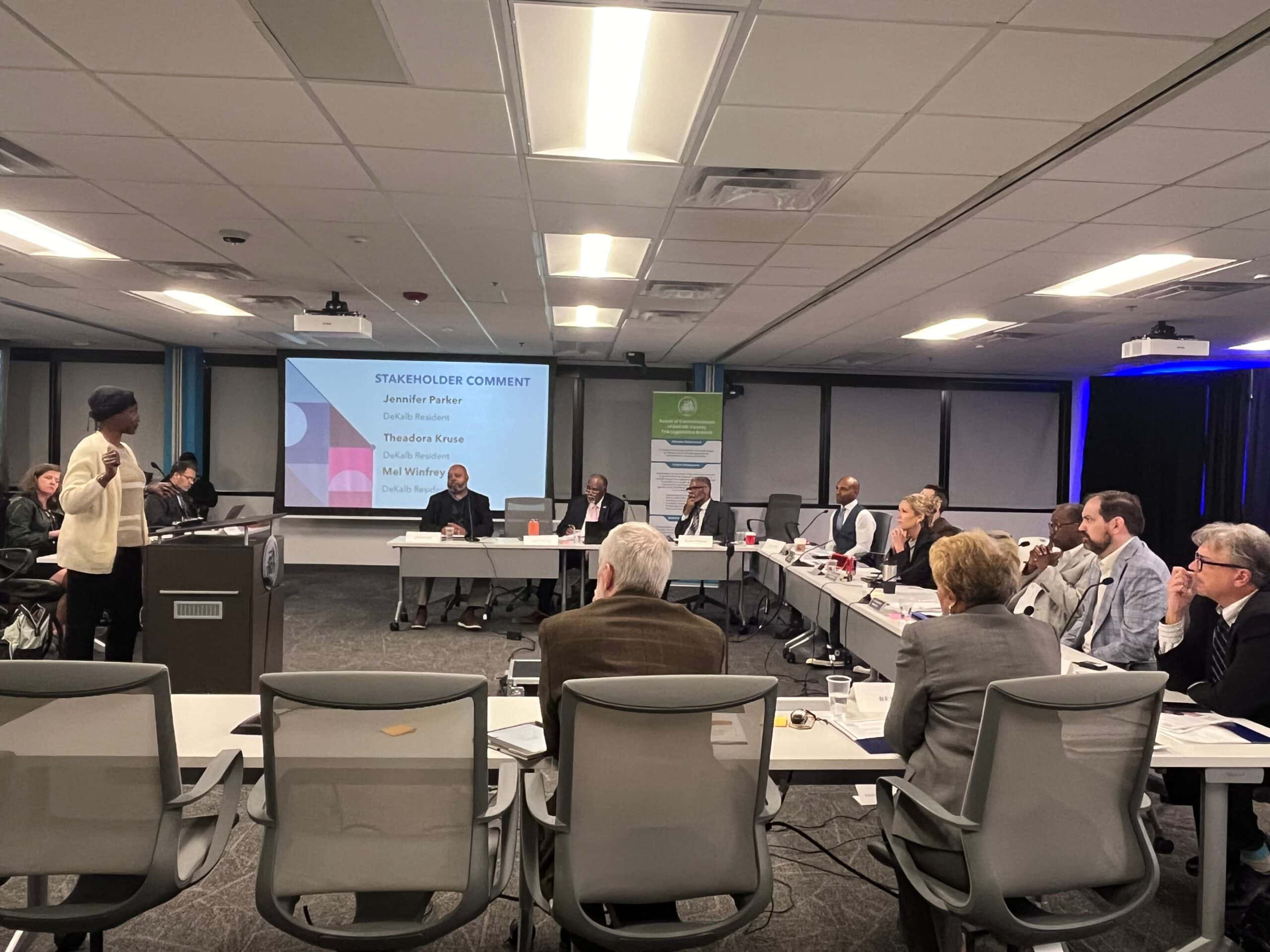
In November 2024, the District 2 office organized an Unhoused Summit to allow experts and community advocates to outline issues and propose solutions for the DeKalb County Board of Commissioners Planning, Economic Development, and Community Services Committee.
How We've Addressed This Critical Issue
The DeKalb County Board of Commissioners, in partnership with the CEO’s office, has addressed this issue in the following ways:
Commissioner Spears and the District 2 office sponsored the first four items above.
- Legislation resolving to establish a Plan for Addressing Homelessness and to Support the Housing First Model passed in 2025
- Legislation appropriating $35,000 from the District 2 American Rescue Plan Interest Account for building repairs to make Hagar's House, a shelter for women with children, operational following storm damage, passed in 2025
- Legislation appropriating $30,000 from the District 2 American Rescue Plan Interest Account to support the expansion of the Rapid Housing program and to provide additional staffing for A Home for Everyone in DeKalb in 2025
- Appropriation of $23,250 from the District 2 Reserve to provide the final funds to Single Parent Alliance and Resource Center (SPARC) for a DeKalb County Homeless Community Assessment
- Approval of an $8 million investment proposed by CEO Lorraine Cochran-Johnson to acquire 60 transitional housing units at Park 500 in 2025
- 60 units were prepared and 60 families moved into the units at Park 500 by the end of December 2025
The District 2 office has built a network of experts in behavioral health, human services, and community development to address the complex issues faced by the unhoused population in DeKalb County.
In the summer of 2025, Commissioner Spears led a delegation of county and municipal officials, behavioral health experts, and community advocates to visit and learn about facilities and programs in San Antonio and Houston that provide comprehensive services that help many homeless residents recover from their experience and build more prosperous lives.
The success of these initiatives will be measured by an improvement in the economic prospects and quality of life of DeKalb residents who have experienced homelessness or housing insecurity.
Plan for Addressing Homelessness
The Plan
In 2025, the DeKalb County Board of Commissioners passed a resolution to incorporate a Plan for Addressing Homelessness as a supplement to the DeKalb County Housing Plan. The Plan for Addressing Homelessness is a collaborative effort of the Board of Commissioners with the DeKalb Behavioral Health Coalition.
The Board of Commissioners commited to promoting policies and practices that facilitate the development and sustainability of Housing First programs, including increasing access to affordable housing and supportive services.
Key Components of The Plan to Address Homelessness
- Housing First: The Housing First Model is a flexible and responsive evidence-based approach to addressing homelessness that prioritizes providing stable housing as the first step in supporting individuals and families.
- Collaborative: Collaboration among local government, service providers, and community stakeholders is essential for the successful implementation of Housing First initiatives in DeKalb County.
-
Increasing Access to Affordable Housing and Supportive Services: To facilitate recovery and to provide conditions for people to achieve stability, policies will be designed to ensure that there is equitable access to affordable housing and supportive services.
Funding for Unhoused Services
In 2025, District 2 has sponsored legislation to commit $88,250 in funding for services that aim to prevent homelessness. From repairs to a storm-damaged shelter to a community assessment of people living in extended stay hotels, we have used funds entrusted to District 2 to make a difference in the lives of DeKalb County’s most vulnerable residents.
In January 2025, the Board of Commissioners passed a resolution to appropriate $35,000 from the District 2 ARP Interest Account to Decatur Cooperative Ministries for repairs to the building at Hagar’s House, a shelter for women with children, following storm damage to the property.
In March 2025, the Board of Commissioners passed a resolution to appropriate $30,000 from the District 2 ARP Interest Account to support Rapid Housing from A Home for Everyone in DeKalb so that this organization could provide direct aid to help people avoid becoming homeless.
In July 2025, the Board of Commissioners passed a resolution to provide $23,250 from the District 2 Reserve to the Single Parent Alliance & Resource Center (SPARC) to complete its assessment of the homeless community in DeKalb County. The living situation of many people in extended stay hotels does not fit any of the traditional categories used by HUD to measure homelessness. SPARC’s community assessment closes a gap in understanding housing instability and factors leading to homelessness by bringing to light the experiences of people living in extended stay hotels.
On January 5, 2026, SPARC presented a report on their community assessment that for the first time documented the full scale and the daily realities of people living in extended stay hotels. For this assessment, interviewers knocked on doors in 42 hotels and spoke with people living in the hotels. They counted over 4500 individuals living in hotels in DeKalb County, 35% of whom are children. Approximately 60% of the hotel residents were single mothers who typically spend 77% of their income on housing. Often the structural barriers that exist – upfront costs such as security deposits for rental properties and a lack of affordable units – keep families trapped in extended stay hotels for months or years.
SPARC’s study provides evidence that there is a growing structural issue that the Board of Commissioners can address via legislation. In collaboration with Chief Housing Officer Dr. Alan Ferguson, we look forward to creating fiscally responsible and sustainable ways to empower our most vulnerable residents to live in decent conditions and for their children to have genuine opportunity to thrive in our community.
Transitional Housing at Park 500
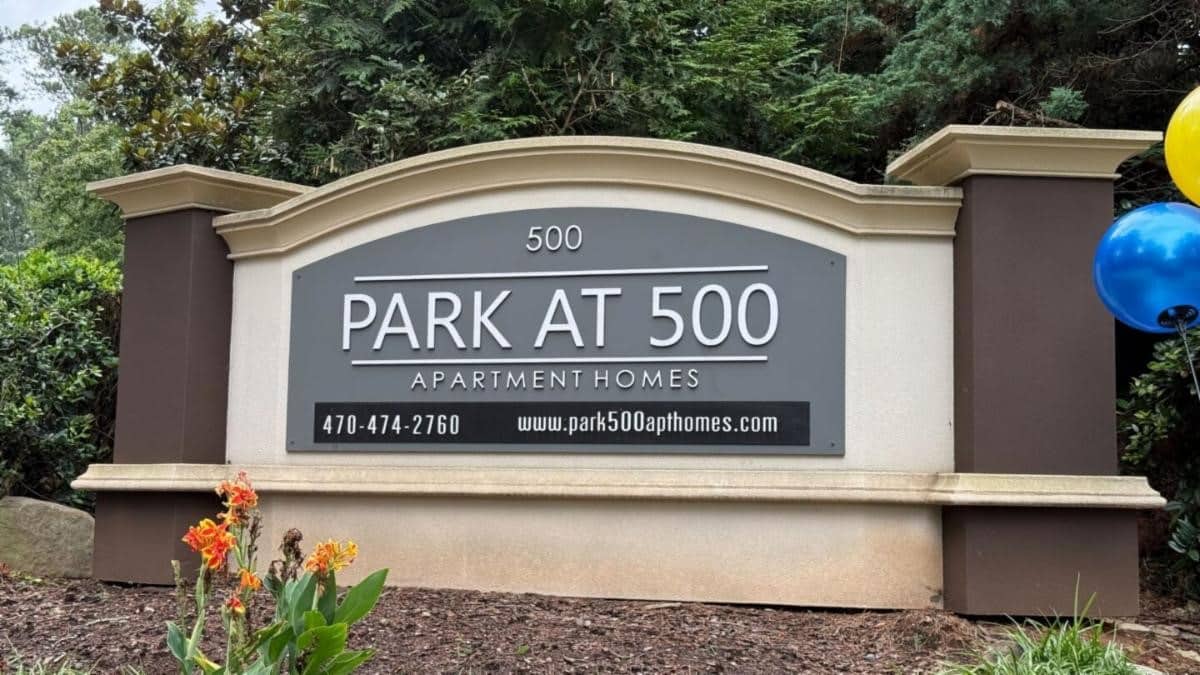
On July 22, 2025, the DeKalb County Board of Commissioners approved the allocation of $8 million in ERA2 Funds to the Housing Authority of DeKalb County for construction and renovation of transitional housing units at Park 500, located in Stone Mountain near Pine Lake. CEO Lorraine Cochran-Johnson proposed this historic investment that provided 60 housing units for families who have been living in extended stay hotels.
Investing in Housing Units
- DeKalb County now owns 60 units at Park 500.
- DeKalb County has used its resources to renovate and prepare these units for families who have been severely cost burdened while living in extended stay hotels.
- These families now have an opportunity to build credit and gain sufficient financial stability to find permanent housing.
CEO Lorraine Cochran-Johnson has launched a bold initiative to make housing affordable for some of DeKalb’s most vulnerable residents.
Residents at Park 500 will receive onsite wraparound services including case management, job support, healthcare access, and childcare coordination.
These services will be provided through the Housing Authority of DeKalb County’s Residential Services Corporation subsidiary in partnership with other non-profits. DeKalb’s Community Development Department will manage resident intake and placement which will be coordinated with local organizations and agencies.
Envisioning the Future,
Learning Best Practices
The District 2 office has supported efforts by the CEO and the Board of Commissioners to envision a future model of homelesness response based on best practices. In the summer of 2025, the District 2 office collaborated with Claratel Behavioral Health to organize in-person tours of facilities and programs nationally recognized for excellence in providing comprehensive recovery services for people experiencing homelessness. Officials from county and municipal governments, behavioral health providers, non-profit leaders, and educators participated in Pathways to Home, a delegation to San Antonio and Houston, to learn about their experiences in providing housing with comprehensive recovery services. The delegation presented a report to the Board of Commissioners on August 28, 2025, that outlines what they learned from these successful programs and suggests future directions that DeKalb County might take in addressing homelessness.
The District 2 office also played a key role in identifying a third-party service provider to conduct a design process that resulted in the Unhoused Support and Services Plan presented to the Board of Commissioners on January 7, 2026. With over 25 years of experience providing process design services for counties and municipalities in California, Intelegy provided expert analysis of DeKalb County’s current systems in place for homeless response, discovered gaps between what is actually needed and what is currently provided, and facilitated discussions among stakeholders to produce a set of actionable recommendations for the foreseeable future.
The District 2 team looks forward to supporting the rollout of new, improved services for people who are unhoused or facing housing instability in the coming years.
Pathways to Home: Texas Delegation 2025
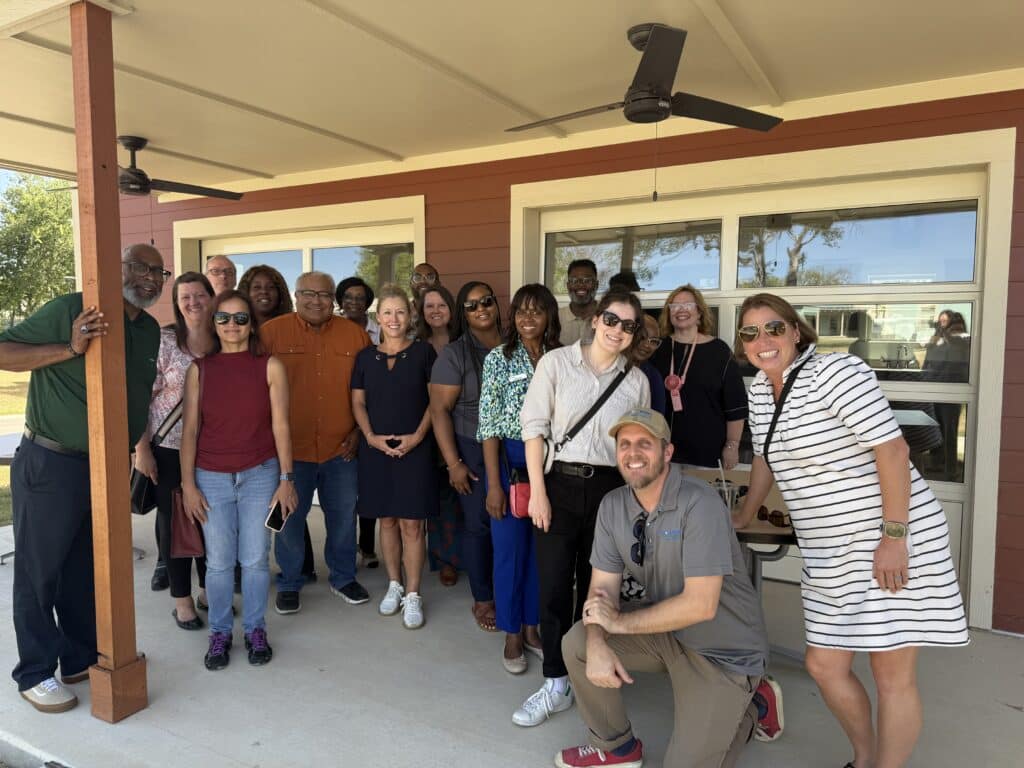
In July 2025, a delegation of county and municipal officials, behavioral health providers, non-profit leaders, and educators went to San Antonio and Houston to explore innovative approaches to homelessness response. Both of these cities have programs and services nationally recognized for excellence in providing compassionate, effective recovery services for people experiencing homelessness.
In San Antonio, the delegation met with officials from the City of San Antonio and learned about the successful public-private partnerships that have produced coordinated, effective, and compassionate responses to people experiencing homelessness. The HUD-funded Continuum of Care is administered by a non-profit organization, Close to Home, that maintains the Homeless Management Information System (HMIS) for the city. Close to Home organizes and funds the Alliance to House Everyone, a coalition of over 60 organizations collaborating to address homelessness in San Antonio and Bexar County.
The delegation visited Haven for Hope, an organization with two campuses serving people experiencing homelessness by providing a variety of residential arrangements and coordinated services that help people recover and find permanent housing. Haven for Hope has been a leader in providing housing for homeless people who have pets. Kennel facilities are available to allow people to keep their companion animals. We also visited San Antonio Pets Alive!, an organization dedicated to saving the lives of animals, to learn about their practices that support the homeless pet population. Finally, we visited Towne Twin Village, a community for chronically homeless people over 55 years old, developed by the Housing First Community Coalition in partnership with several organizations. This village of tiny homes provides permanent housing, medical services, and a central dining hall that serves breakfast and lunch.
Next our group went to Houston to meet with city and county officials about Houston and Harris County’s response to homelessness. In Houston, the HUD-funded Continuum of Care is called The Way Home. The Way Home is a collective of coordinated access service providers. The lead agency for The Way Home, which manages the Homeless Management Information System, is the Coalition for the Homeless of Houston/Harris.
We visited New Hope Housing, an apartment community that provides permanent supportive housing for people experiencing homelessness, including medical care, life skills training, and financial management education. We also visited Houston’s Navigation Center, which provides temporary, semi-private accommodations while assessing the needs of clients.
Houston offers a diversion program for people who commit non-violent crimes, many of whom are homeless and/or suffering from mental health conditions. We visited the Harris Center for Mental Health and Intellectual and Developmental Disabilities to gain insight into how best to implement a similar program here in DeKalb County.
In Houston, we learned how compassionate practices in law enforcement produce better outcomes. The constables in Houston and Harris County have paid particular attention to the community relations aspect of their role. They work towards providing public safety with a heart to protect the most vulnerable members of their communities.
Many thanks to our partner in organizing this informative trip, Claratel Behavioral Health! DeKalb County’s response to homelessness will be crafted with the benefit of having witnessed best practices in other cities at work. We look forward to emulating their successes and tailoring their types of solutions to DeKalb’s unique needs.
Unhoused Support and Services Plan: A Collective Impact Initiative
In 2025, DeKalb County initiated a collective impact process involving organizations in the public and private sectors committed to improving the experience of services for unhoused people and envisioning ways to work together to achieve better outcomes. The collective impact model was developed by FSG (Foundation Strategy Group) after years of experience working with for-profit and non-profit corporations to achieve deeper systemic solutions to social problems. Their article, Collective Impact, which appeared in the Stanford Social Innovation Review in 2011, describes the sucessful process of collaboration for collective impact that improved student achievement in Cincinnati schools. Cincinnati achieved phenomenal success because leaders of organizations put the common goal of measurably higher student achievement ahead of their individual organizations’ agendas. They were then able to direct the excellence and strength within their organizations towards achieving their part of the overall goal. The shift from isolated impact to collective impact requires continuous communication through a backbone support organization. This allows participating for-profit, non-profit, and governmental organizations to build trust over time so that long-term solutions are produced.
On January 7, 2026, Intelegy CEO Carole Cantore Dotson presented the results of the initial collective impact process to the DeKalb County Board of Commissioners. Intelegy engaged 29 organizations that have worked with the DeKalb County homeless population in a series of working group sessions to produce a comprehensive support and services plan for unhoused individuals and families. They agreed on guidelines that included building on existing efforts with actionable and realistic plans, focusing on solutions for the common good.
The resulting Unhoused Supprort and Services Plan includes the following action items:
1. Establish a DeKalb County Unhoused Support and Services Non-Profit Collaborative
2. Develop a DeKalb Housing & Services Access Line
3. Consolidate DeKalb Resource Guides and Create an Update Process
4. Develop Regional Resource Hubs
5. Expand Coordinated Entry Options, Increase Street Outreach and Case Management
6. Establish a Low-Barrier Non-Congregate Family Shelter
7. Organize Shared Technology, Data Sharing, and Community-Level Dashboards
Based on the experiences of the various organizations, the collective impact process identified a broader target population needing services that includes both unhoused and housing insecure neighbors. By providing services to people who live in extended stay hotels, in their car, in shelters, and in temporary housing, organizations within the collaborative can prevent or reduce the duration of homeless episodes and more effectively help people regain stability and permanent housing.
We look forward to continuing the collective impact process by proposing legislation that supports the formation of the type of public-private partnerships recommended by Intelegy and our friends in Houston and San Antonio.
